When to resole your climbing shoes?
See the information and images below and watch the "Shoe Doctor" video to learn about when to resole your climbing shoes.
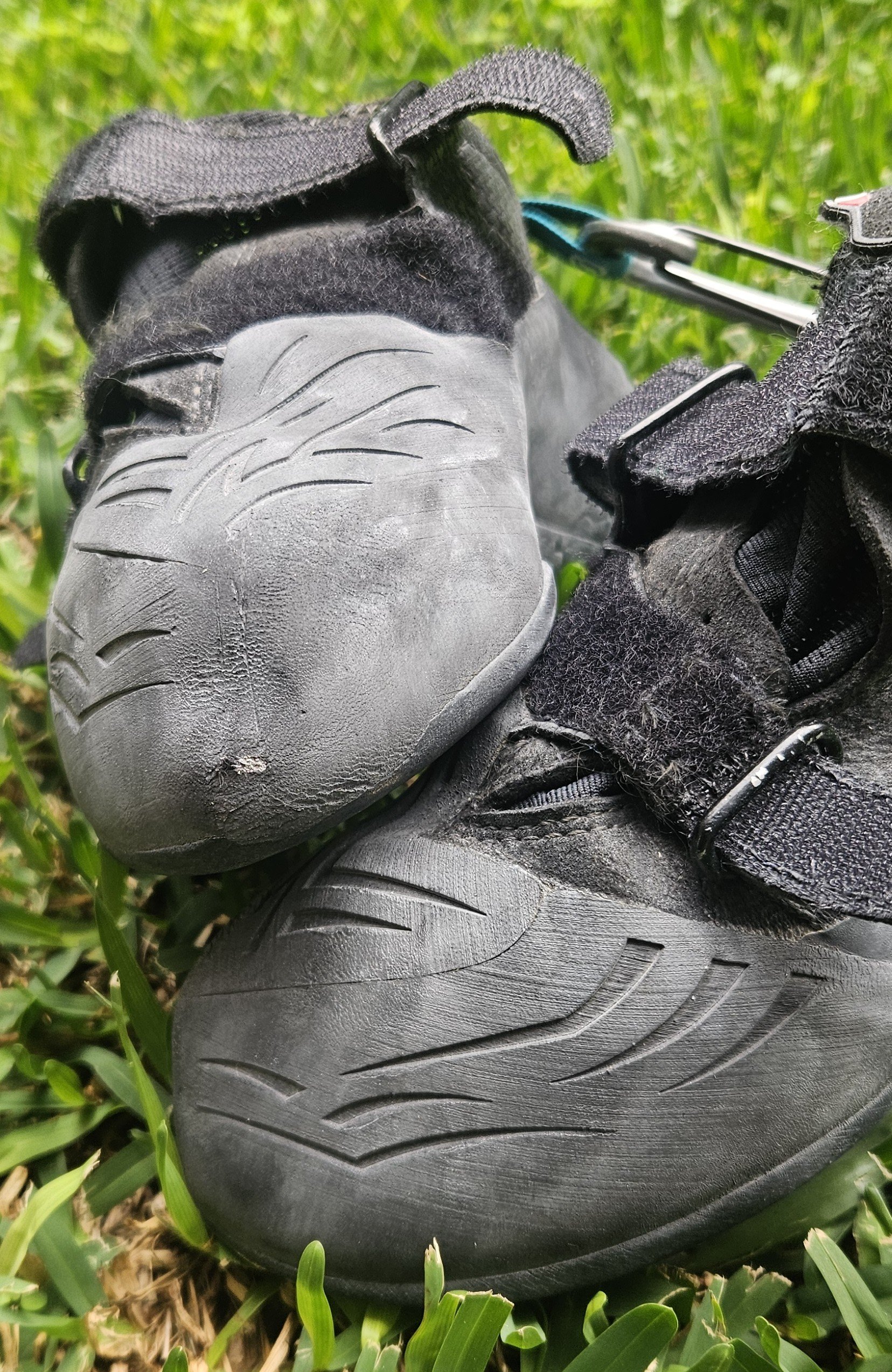
Standard Resole (Ideal time)
The sole is beginning to thin or 'dip' near the big toe, as shown in the image below..
Rand is intact and feels firm when pressed.
While still usable, continuing to climb at this stage increases the risk of rand damage and may necessitate more extensive repairs.
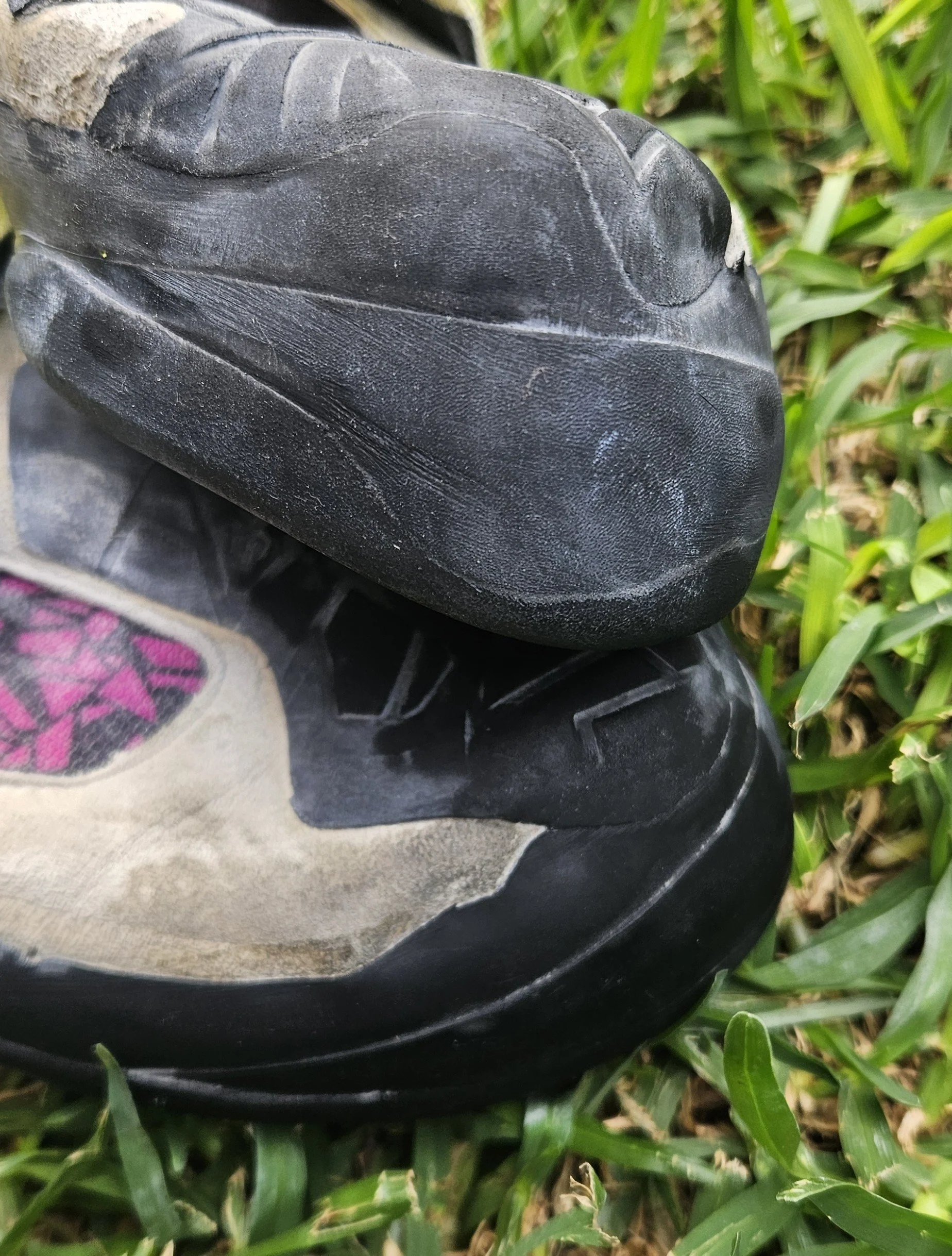
Rand Repair/ Hole repair
dip or flat spot right against the rand, or a small hole forming in the thin toe rubber. (as seen in image below)
At this stage the upper is at risk, so a rand repair is done together with a resole to restore structure and stop further damage.
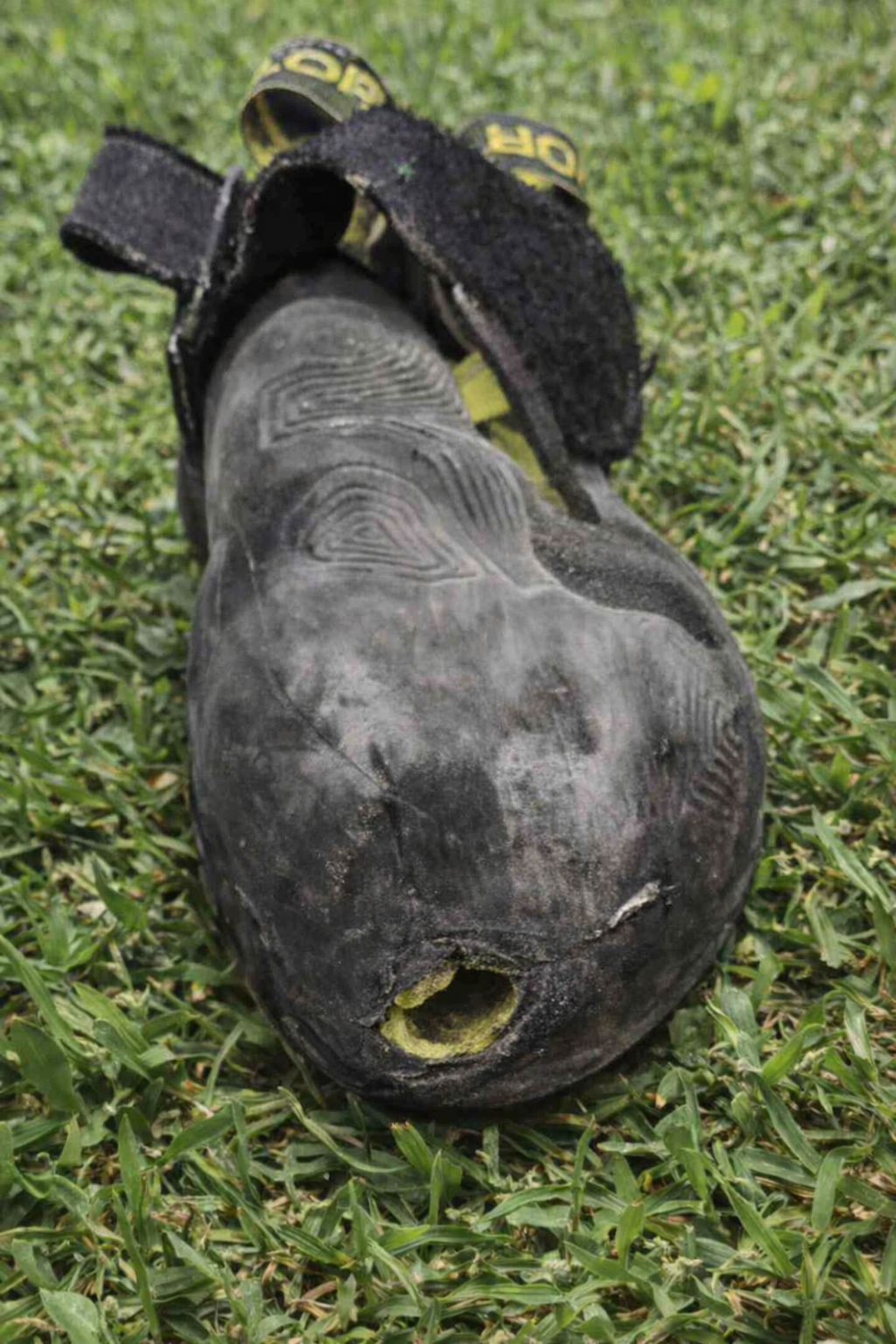
If a small hole have formed through the material underneath this can also be repair but will incur an extra fee. (Large holes are unable to be repaired like that seen to the right.)
Too late
Once a hole penetrates the upper material, the shoe's structural integrity is compromised. At this stage, the leather or synthetic fabric has been breached, causing the shoe to lose its original tension, shape, and support.
At that point the rubber isn’t just worn, the fabric or leather underneath has been breached, which means the shoe has lost tension, shape, and support.
We recommend resoling well before this stage to maximize the lifespan of your shoes.